
The 25th of December was an unexpected day—one I could scarcely have anticipated. I never foresaw the profound experience that awaited me.
It was not my first encounter with a correctional facility. Previously, as part of the Gani Fawehinmi Chambers of Justice at the University of Calabar, I had participated in “Project Reprieve,” an initiative dedicated to securing the release of inmates detained for fine-option offences and other non-violent matters. On that earlier occasion, however, I remained firmly outside the walls—confined to the office of the officer in charge. I never crossed the threshold, never glimpsed the cells, never truly grasped the weight of incarceration.
But December 25th was different.
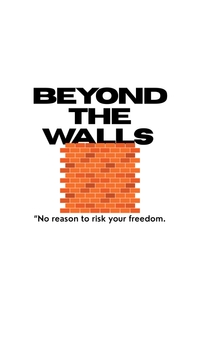
That Christmas Day, I ventured beyond the walls of the Afokang Correctional Centre in Calabar, Cross River State. I passed through the iron gates. Before commencing the work that had brought us there, I conducted due diligence: I needed to see for myself, to absorb the reality of the environment, to ensure that everything was in order.
What I witnessed struck me to the core.
I came to a stark realisation: many of us fail to appreciate the gift of freedom. We take it for granted, squandering it casually, heedless of its true cost. Behind those walls were individuals who had languished for years, others for months. Not all were guilty—some had simply been in the wrong place at the wrong time; others had never been properly heard; still others remained trapped because the facility lacked even a functioning vehicle to transport them to the court district where their cases awaited adjudication.
The scene was overwhelming.
A torrent of emotions surged within me—profound sadness, simmering anger, bewilderment, and, paradoxically, deep gratitude. The question that first pierced my mind was this: Why would anyone willingly risk their freedom?
That day served as an indelible reminder, a solemn warning, a life-altering lesson.
A reminder to guard my own liberty jealously.
A reminder to counsel those dear to me against gambling with theirs.
It was Christmas Day, yet I spent its entirety within those confines. After stepping inside and confronting the stark reality of life behind bars, the passage of hours ceased to matter. What endured was our purpose.
And in the end, it proved profoundly fulfilling.
We facilitated the release of fifteen inmates. Fifteen human beings stepped back into the light of freedom that day. Fifteen families regained hope. Fifteen lives veered onto a new trajectory.
The moment humbled me to my very marrow.
It underscored the importance of gratitude—to God for the gift of life, for family, for upbringing, even for the smallest privileges we so often overlook. We are not inherently superior to those within those walls. Many simply lacked guidance in their formative years; others were betrayed by circumstance; still others were failed by an imperfect system.
I also encountered individuals one might assume money or influence could liberate—people whose families appeared capable of bending the arc of justice. Yet there they remained: waiting, forgotten, stripped of power.
That day struck a different chord within me.
It revealed that freedom is fragile—a delicate thread easily severed.
That justice, though aspired to, remains imperfect and uneven.
That life can pivot on a single misstep, a fleeting wrong turn.
And above all, that there is truly no reason—no justification, no fleeting thrill worth the price—to risk your freedom.
Freedom is not merely the absence of bars; it is the presence of possibility. Once lost, reclaiming it can feel like scaling a wall that grows taller with every passing day.
Let this reflection serve as both mirror and caution: cherish your liberty, for it is more precious—and more precarious—than we dare.
Loading comments...
